

Some uncomfortable truths about HR
Media debates about HR often remain at the level of right or wrong, good or bad. Feelings and experiences dominate, while underlying challenges can go unaddressed. This article explores some of them.
Date
7 April, 2026
Categories
Perspectives
Written by
Erik Cedergren
At a time of rapid and accelerating technological development, HR faces major challenges as a profession. It is not particularly difficult to anticipate what will happen to internal HR functions.
It has already happened in several large Swedish companies.
Cuts and reductions in HR headcount. Greater cost efficiency is expected of the function. Fewer people are expected to do more, with AI filling the gaps.
There is a logic to this. One of the main foundations of HR’s role is now at risk of being replaced by technology.
Much of HR administration can be automated
Many administrative tasks that once required a small army of HR employees can now be streamlined and automated to require little more than a few clicks.
Experience tells us that this will lead to job losses. Employers have little reason to preserve HR roles that lack a clear purpose or contribution to the business.
The question is therefore: what role does HR play beyond administration? What else does it contribute?
HR still has an identity crisis
In trying to move beyond its administrative heritage, modern HR has sought to reinvent itself and find a role beyond administrative support.
Dave Ulrich’s model, which has underpinned this development, originally described HR as Strategic Partners, Change Makers, Administrative Experts and Employee Champions. It has since been updated and expanded to include more.
Alongside those roles, Ulrich argues that HR should deliver more across the board, become more flexible and responsive, and take on roles such as Credible Activists, Strategic Positioners and Paradox Navigators.
There is no shortage of ideas about what HR might do beyond administration.
But there is a major problem: demand. Few people want HR to take on these activities, least of all CEOs and leadership teams.
To be clear, CEOs and leadership teams absolutely want people-related issues handled correctly, laws followed and business objectives that depend on employees achieved. They also want relevant employee data to support decisions. What they do not want is an internal body that believes it knows better than they do how to lead the organisation, or that pursues objectives separate from the established business goals.
The scope for HR to pursue an independent agenda or take ownership of organisational challenges without a mandate is therefore limited. HR professionals who work this way risk being seen as unnecessary and, ultimately, redundant.
What role, then, can HR play beyond administration?
HR is not the best owner of culture and “soft” issues
HR can contribute, establish foundations, guide and support. But the underlying problem goes beyond wording.
People & Culture, or P&C, is the latest attempt by HR to find its place and relevance in modern organisations. This often includes responsibility and ownership for culture.
But is P&C better placed to own and lead culture than the CEO and leadership team?
Unfortunately not. These issues are often marginalised when delegated away from senior leadership, regardless of who receives them.
Take culture as an example.
Employees who have been around for a while know who makes the decisions, and they know it is not HR. They know that the culture promoted by P&C applies only until something sufficiently important happens in the business. Then the “real” culture takes over and determines what happens. The culture carefully cultivated by P&C can then appear illusory.
The same problem affects other “soft” issues, including DEI, ethics and, to some extent, leadership.
As long as people or functions can ignore or override these matters, credibility suffers. CEOs and leadership teams cannot meaningfully delegate their accountability and ownership for them. Assigning them to HR is therefore a poor solution.
What strengths does HR have beyond taking ownership of “soft” issues?
HR does not have a unique ability to understand people
Another uncomfortable truth for HR is that the profession has no unique expertise in understanding people, whether acquired through education or through the role itself.
A year of university-level behavioural science or equivalent provides a theoretical foundation in human behaviour. It does not give individuals unique interpersonal abilities.
Nor is HR’s way of working with people unique, or uniquely transformative in developing the ability to understand and manage them. Many other professions provide as much or more experience in assessing people, handling difficult conversations, managing crises, leading, motivating and addressing ethical issues.
HR’s administrative workload also reduces the interpersonal contact outsiders often assume defines the profession. There is some truth in the saying, “If you want to work with people, do not work in HR.” HR primarily supports managers and leadership and manages the conditions under which employees work, rather than interacting directly with employees.
There are highly skilled people in HR who understand others exceptionally well and do excellent work. But such individuals are not disproportionately concentrated in HR compared with other professions.
HR faces a difficult reckoning
HR is under scrutiny as both a function and a profession.
This has been the case for some time. Now, however, the last foundation that has made HR necessary in organisations is being shaken: administration.
Taken to their logical conclusion, the questions now being asked are:
Is HR needed? Does an HR function serve a purpose? Should HR be dismantled altogether?
Good questions. Necessary questions.
Hopefully, they will encourage more HR professionals to find the courage to develop further. The choice ahead will increasingly be to move forward or move out.
The space for HR to find its role is shrinking quickly. There is enormous potential within HR, but organisations’ patience with the time and resources needed to realise it is running out.
Relaterade inlägg
People First? Yes. And no.
“People First” is one of LinkedIn’s most popular sayings. It sounds obvious. But what does it mean in practice? And why is it so often misinterpreted, even though the business must come first, through people?

Should HR be friends with employees?
A recent LinkedIn discussion followed a Svenska Dagbladet article about growing frustration with HR and the idea that HR is “not your friend”. It raises a question: should HR act as a friend to employees?

Some uncomfortable truths about HR
Media debates about HR often remain at the level of right or wrong, good or bad. Feelings and experiences dominate, while underlying challenges can go unaddressed. This article explores some of them.

Brave HR? No, thank you
Why air traffic control should be HR’s model
Employer branding has grown up. Now it must find its role!
We were invited to contribute to Magnetude, the Magnet Awards magazine, on the future of employer branding as a discipline and, above all, its connection to the wider business.
Stop pointing at HR. The buck stops here,
HR can support, provide structure and create tools. But HR does not lead the teams, set daily priorities or shape psychological safety through everyday management. You do, as a manager.
It’s time to modernise HR work – properly
HR has evolved over a hundred years, but are the structures built for today’s demands? If employees are crucial, why is there then a lack of overview, insight and control over structures and the ability to deliver?
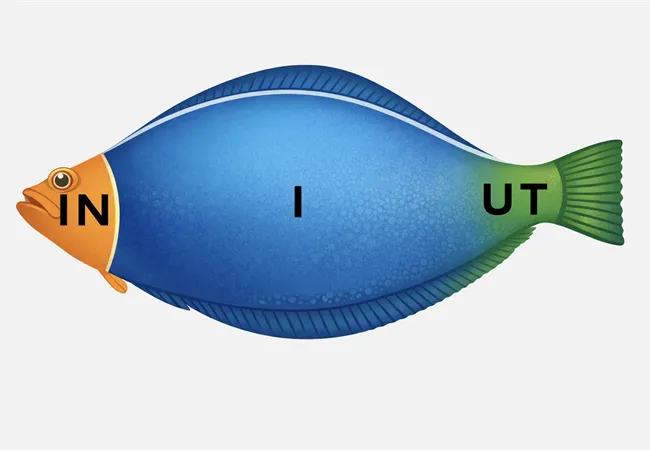
ARUBA, the Underground map and why we also need the HR flounder
The ARUBA model has helped HR create structure and understanding. But it is not particularly good at clarifying where value is actually created.